Hyeonsoo "Harris" Jeong
Principal Investigator
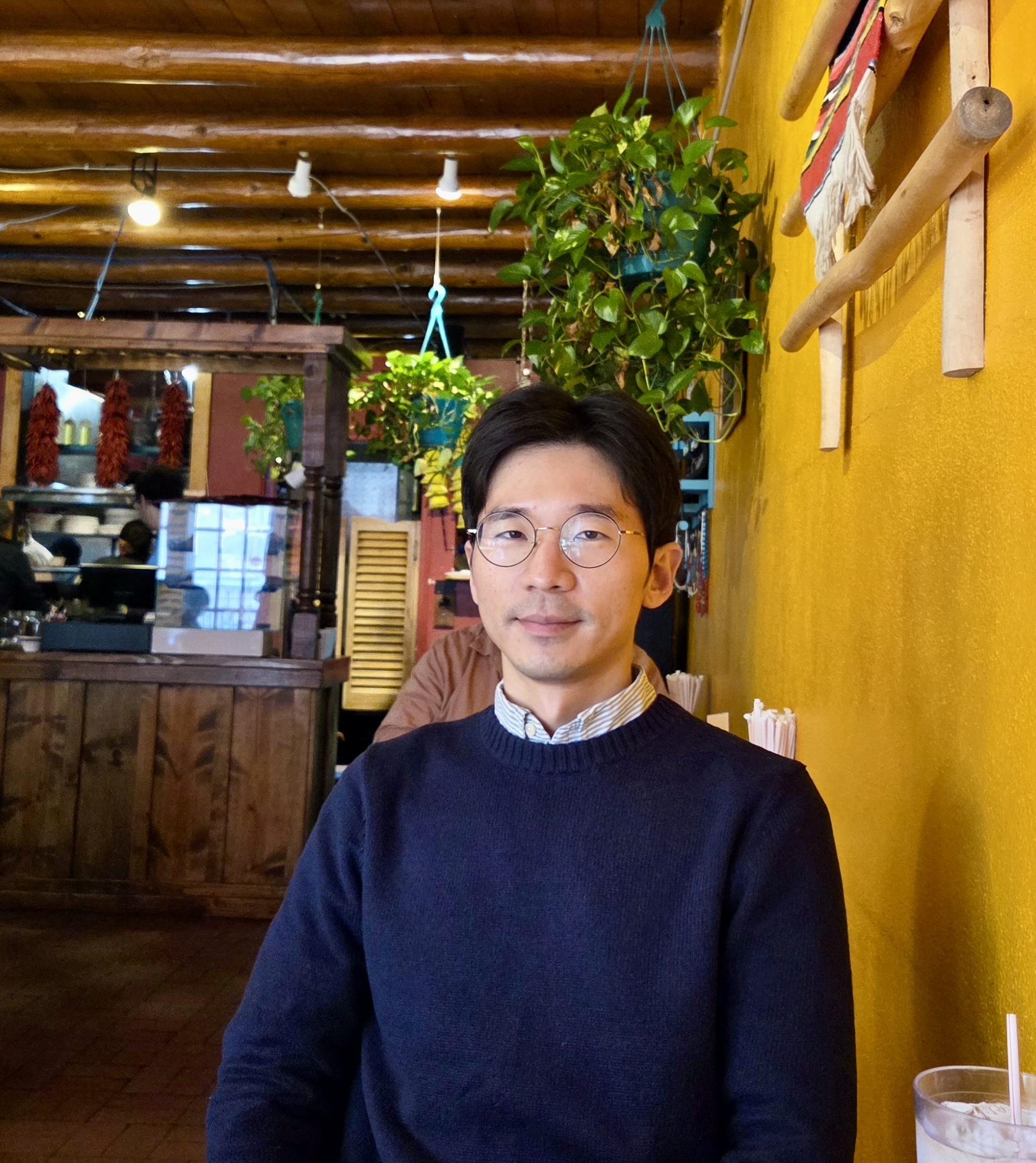
Hyeonsoo "Harris" Jeong
Principal Investigator
Assistant Professor
Department of Life Sciences
Gwangju Institute of Science and Technology (GIST)
- Office
- 123 Cheomdangwagi-ro, Buk-gu, Gwangju 61005, Republic of Korea
- Tel
- +82-62-715-2505
- hrrsjeong [at] gist.ac.kr
Work Experience
- 2026–Present
Assistant Professor
Department of Life Sciences, Gwangju Institute of Science and Technology (GIST)
- 2023–2026
Computational Scientist
Altos Labs, San Diego Institute of Science · Kun Zhang Group
- 2022–2023
Postdoctoral Researcher
Howard Hughes Medical Institute and Department of Genome Sciences, University of Washington · Evan Eichler Lab
Education
- 2017–2021
Ph.D. in Bioinformatics
Georgia Institute of Technology
- 2016–2017
M.S. in Biostatistics
University of Illinois Urbana-Champaign
- 2014–2016
M.S. in Bioinformatics
Interdisciplinary Program in Bioinformatics, Seoul National University
- 2008–2014
B.S. in Bioinformatics & Biotechnology
Korea University, Sejong, Korea
Biography
I am a geneticist and computational genome scientist interested in how genomic and epigenomic variation makes us uniquely human.
During my Ph.D. with Prof. Soojin V. Yi, I studied the evolution of DNA methylation in human and non-human primate brains. Using cell type-resolved methylomes from neurons and oligodendrocytes, I investigated how human-specific epigenomic changes contribute to gene regulation, brain function, and disease-associated genomic regions. This work shaped my broader interest in using comparative epigenomics to understand the molecular features that distinguish humans from other primates.
As a postdoctoral researcher in Evan Eichler’s lab at the University of Washington, I expanded my research into long-read sequencing, telomere-to-telomere genome assemblies, and complex structural variation. I studied genomic regions such as segmental duplications and large structural variants that had been difficult to assemble and analyze using short-read sequencing. These regions are among the most dynamic parts of the genome and play important roles in human diversity, evolution, and disease-relevant genome architecture.
At Altos Labs, I extended my research into aging, using single-cell DNA methylation and multi-omic approaches to study cell-type-specific epigenetic aging, tissue injury, and disease-associated repair states. This experience deepened my interest in connecting evolutionary medicine with the mechanisms of age-associated disease.
At GIST, my laboratory brings these directions together to study genome structure and regulation through comparative genomics and computational analysis. We investigate how genomic and epigenomic variation emerges across species and populations, and how this variation contributes to human evolution, neurological disorders, and aging-associated disease.